

My Zero Waste Grocery Habits
Zero waste is an ambitious term. While it is possible to reach the goal of zero package waste for some products, reducing the amount of packaging that enters my home is the best alternative for some products. Unfortunately, I often contribute to the amount of waste for many products. 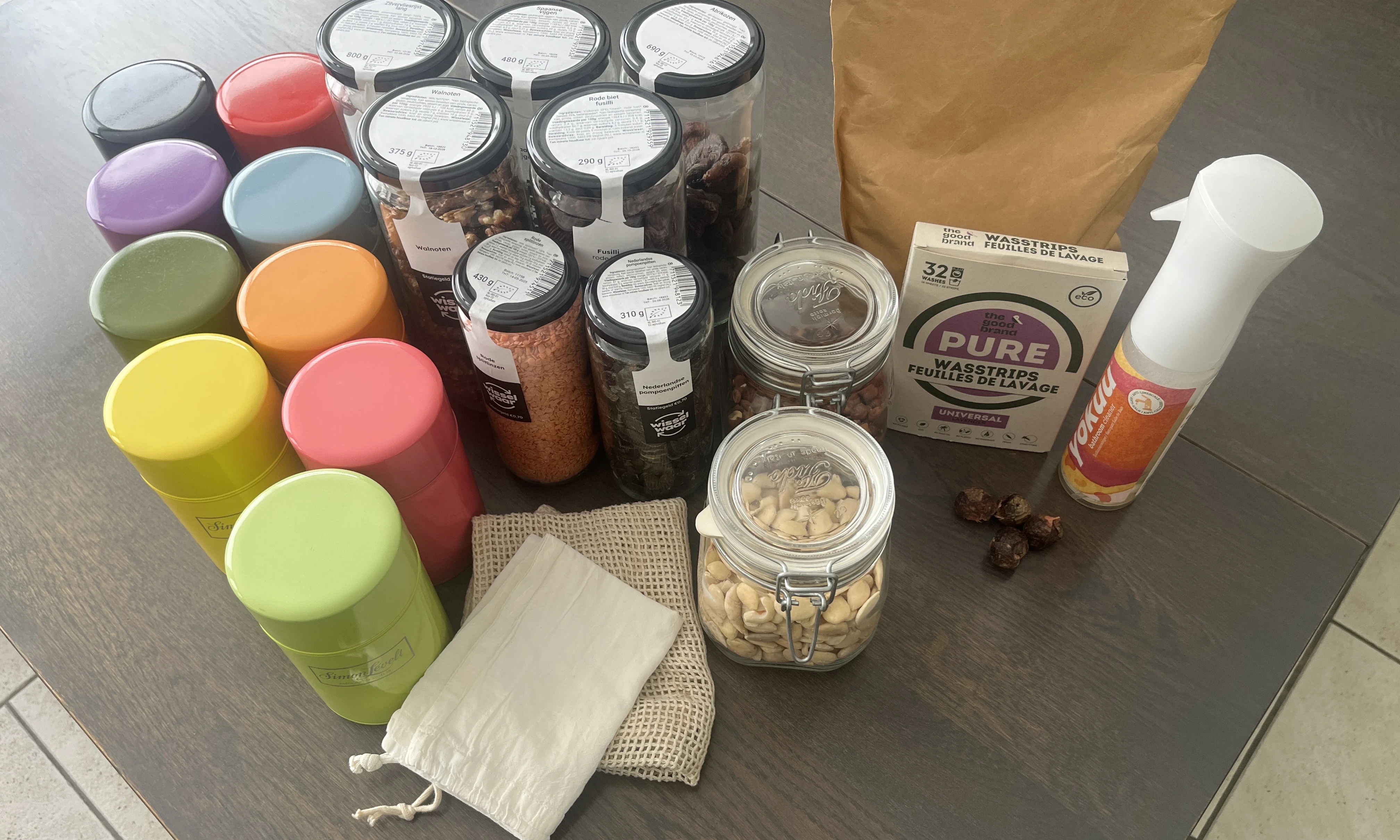
Below is a list of the things I buy to reduce or eliminate waste.
Tea
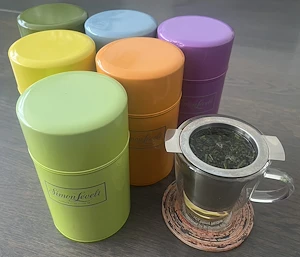
More than ten years ago, I started thinking about reducing packaging in my daily life. One of the first products I tried this with was tea, it felt so easy. I’ve always preferred loose leaf tea, it tastes so much better. In real tea-producing countries, people probably laugh at our tea bags because they see them as the waste left from broken or lower-quality leaves, so maybe tea bags are also a way of zero waste ;-).
I buy my tea at Simon Lévelt. You can bring your own tea tins to fill, and they even give a small discount of ten cents. It’s nice to see companies encouraging us to reduce waste.
For me, this became a simple routine: bring the tin, refill it, and enjoy tea without extra packaging. It feels so normal now that I can’t imagine it anymore buying it in plastic, to fill a tin at home, and then throwing the plastic away.
Deposit jars
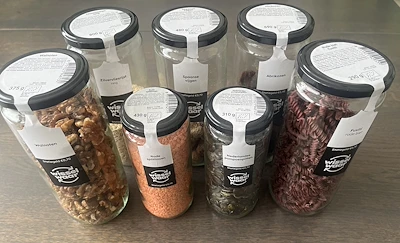
A couple of years ago, Wisselwaar was introduced. It's perhaps the easiest way if you want to pursue a zero waste lifestyle. It's available in several product groups, such as nuts, dried fruit, cookies, coffee and tea, pasta, rice, legumes and grains. The selection within each group is limited, usually to a few items. However, the assortment grows slightly each year, which is nice. Because of this, you don’t always find exactly what you need, and some products can be expensive, so I only buy them occasionally or for special occasions.
Self‑serve refill wall
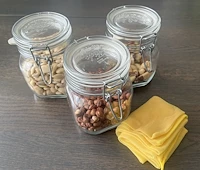
How I do my shopping at the refill wall is something I often get questions about at the checkout. At Ekoplaza, it’s really no different than weighing vegetables, only here you weigh products like nuts, grains, or dried fruit.
I always bring my own jars and a reusable bag. I use the bag to weigh the products, then transfer everything neatly into the jars for storage at home.
Cleaning and toothpaste
Another category where I try to reduce packaging is cleaning products. Over time I switched to a few alternatives that use much less plastic than the typical bottles from the supermarket.
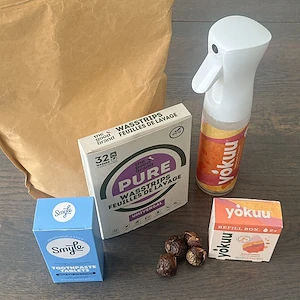
For laundry I use for many years soap nuts and sometimes wash strips. Soap nuts are a natural product which is great. Both still have packaging but far less than the large plastic bottles of liquid detergent.
The product for bathroom cleaning I use from Yokuu. They use bacteria-based cleaning and come as powder refills that you mix with water in a reusable spray bottle. The bottle itself is quite nice to use. It builds pressure, so it keeps spraying while pumping, which works better than many ordinary spray bottles.
Most of these alternatives are comparable in price, sometimes even cheaper. Soap nuts in particular last a long time. One downside is that the brands available at the Ekoplaza change from time to time. Products compete for shelf space, so every few years a refill system disappears and another brand replaces it, which sometimes means buying a new reusable bottle.
For toothpaste I use toothpaste tablets. At the moment I use them from Smyle. They are easy to use and reduce plastic tubes, although the price depends on the brand. I also noticed that the packaging slowly became larger over time. It started as a small paper bag, then a cardboard box around it, and now a bigger box to stand out on the shelf.
Previously Ekoplaza also sold tablets from Denttabs, which had more tablets for the same price and less marketing packaging. I really miss them in the store, although the taste was a bit less. I’m not sure what I’ll do in the future. Ordering them online would mean a much larger shipping package and more waste, buying Smyle means accepting the growing box and higher price, or maybe deciding it’s not worth it and going back to toothpaste tubes.
Cotton bags
For many people, it's probably already common practice to take reusable cotton bags when buying fruits and vegetables. It's super easy because they don't take up much space.
Final Thoughts
Some habits have been easy to adopt. For example, I really like using refillable tea tins and bringing my own jars to the deposit system. However, I hope the variety of products in the deposit system grows faster in the future, making it easier to achieve zero waste.
The reality is that not all products have a permanent place on the store shelves. Some products compete heavily for shelf space, and brands may increase packaging to stand out, which can make zero-waste shopping more expensive. Other products may disappear entirely, making zero-waste shopping inconsistent. It’s a long road, but small choices can still make a difference.
I hope this post gives you ideas for your own shopping habits. If you have any tips or experiences to share, I'd love to hear them in the comments!
Comments
Register or login to leave a comment